
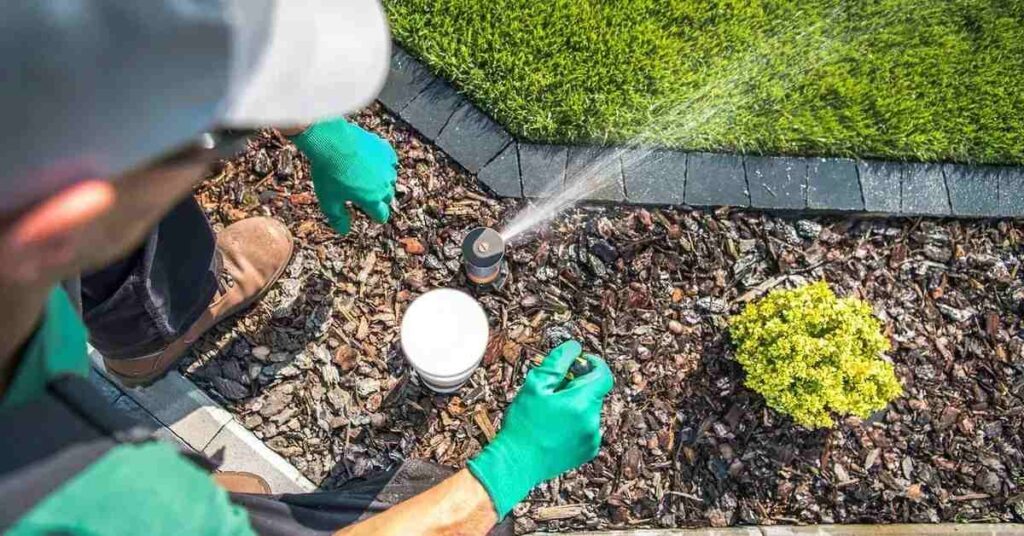
A sprinkler system can appear to work normally while wasting water or leaving parts of your landscape too dry. Irrigation Inspection looks beyond a quick visual check by testing how the system operates, how each zone distributes water, and whether individual components are performing as expected.
For homeowners in Lott, TX, finding these problems early can help protect lawns, plants, soil, and the property itself. A system that runs on schedule is not necessarily a system that uses water efficiently.
What Problems Can an Irrigation System Inspection Reveal?
An irrigation system inspection can identify problems that are easy to overlook during everyday use. Some defects are visible, while others become apparent only when the system is activated and each zone is evaluated.
Common findings can include:
- Broken, clogged, tilted, or poorly positioned sprinkler heads
- Uneven spray patterns and incomplete coverage
- Weak or inconsistent water distribution
- Leaks around visible connections or components
- Zone activation problems
- Controller or scheduling issues
- Signs that may point to an underground leak
- Excessive watering in areas that do not need it
These issues can affect more than the appearance of your lawn. Uneven watering may create dry patches in one area while another becomes saturated. Over time, poor distribution can affect plants, soil conditions, walkways, and other parts of the landscape.
If an irrigation problem is connected to a larger property concern, reviewing major home inspection problems can also help homeowners understand why early identification matters.
How Does Sprinkler System Inspection Find Problems You Cannot See?
A Sprinkler System Inspection can reveal hidden performance problems by combining visual checks with actual system operation. Each irrigation zone can be activated and observed for coverage, spray behavior, component condition, and other signs of poor performance.
The important difference is that an inspector does not simply look at whether water comes out. The inspection considers where the water goes, how consistently it is distributed, and whether the equipment responds correctly.
For example, a sprinkler head may activate but spray toward a sidewalk instead of the lawn. Another head may be partially clogged and produce a weak pattern. A valve may also fail to operate correctly even though other zones appear normal.
These small problems can remain unnoticed until they contribute to higher water use, unhealthy landscaping, or more extensive system repairs.
Which Sprinkler Components Should Be Checked?
A complete evaluation should consider the parts that control water delivery as well as the areas receiving the water. Looking at the system as a whole makes it easier to connect individual defects with their effects on the landscape.
Sprinkler Heads and Spray Patterns
A Sprinkler Head Inspection can identify damaged, clogged, tilted, or incorrectly aligned heads. The goal is to determine whether water reaches the intended area instead of creating unnecessary runoff or dry zones.
Spray patterns should also be observed while the system operates. A head can look fine when inactive but show poor coverage once pressurized.
Zones, Controls, and Water Distribution
Each irrigation zone should be tested to confirm that it activates properly and provides consistent coverage. The controller should also be checked under normal operating conditions.
Poor scheduling, incorrect zone settings, or equipment problems can cause the system to run longer than necessary. That can increase water use without improving landscape health.
Can an Inspection Detect Water Waste Before It Raises Your Bill?
Yes. An inspection can identify conditions that commonly contribute to unnecessary water use, including leaks, damaged heads, poor spray patterns, and inefficient distribution. Finding these conditions early gives homeowners an opportunity to correct the problem before water waste becomes a recurring expense.
This is where Irrigation Inspection becomes more than a basic equipment check. Water efficiency depends on the complete system working together.
For properties in Lott and surrounding Falls County areas, local conditions and seasonal watering needs can make proper system adjustment especially useful. Homeowners should also pay attention to sudden changes in water use, unexplained wet spots, or sections of lawn that repeatedly become unusually dry.
The goal is not simply to make every sprinkler run. It is to make sure the system delivers water where it is needed with as little unnecessary loss as possible.
What Happens During a Professional Irrigation Inspection?
A practical inspection follows a clear sequence so problems can be traced to the component or operating condition causing them.
- Review the system: The inspector identifies accessible components, zones, controls, and visible system conditions.
- Activate the zones: Each zone is operated so performance can be observed under normal conditions.
- Check sprinkler heads: Heads are evaluated for damage, clogging, positioning, and spray behavior.
- Evaluate coverage: Water distribution is observed to identify dry areas, overspray, pooling, or uneven coverage.
- Check controls and equipment: The controller and relevant equipment are evaluated for normal operation.
- Document findings: Observations are organized so homeowners can understand which issues need attention and what may require further evaluation.
Liberty Home Inspections’ service information specifically describes zone testing, spray-pattern evaluation, damaged-component detection, water-efficiency checks, backflow-prevention evaluation, and control-panel operation as parts of its irrigation inspection approach.
Schedule an Irrigation Inspection to identify system problems before they become larger repair concerns.
When Should Lott Homeowners Schedule an Irrigation Check?
An inspection can be useful when buying or selling a property, after noticing unusual watering patterns, or when an older system has not been evaluated for some time.
Consider arranging an evaluation if you notice:
- Repeated dry or overly wet areas
- Water pooling after irrigation
- Sprinklers spraying onto hard surfaces
- Heads that fail to rise, rotate, or spray correctly
- A noticeable change in water consumption
- Zones that do not activate consistently
- Landscape damage that does not match normal weather conditions
An inspection can also provide useful information before planning repairs. Instead of replacing parts based on guesswork, homeowners can first understand which components appear to be causing the performance problem.
For a Lott property, the service area can be especially relevant when an irrigation issue affects landscaping around the home, driveway, walkways, or other outdoor areas.
Why Does Early Detection Improve Irrigation Water Efficiency?
Irrigation Inspection can support better water efficiency because it identifies the conditions that prevent water from being distributed correctly. Fixing a single clogged head or correcting a misaligned spray may improve coverage without increasing the watering schedule.
Early detection also helps homeowners separate maintenance issues from problems that may need further professional evaluation. An inspector can document accessible findings and point out conditions that warrant additional attention.
Liberty Home Inspections states that its irrigation evaluation is designed to identify inefficiencies, damaged components, coverage problems, and other conditions that can affect landscape health and water use.
For local homeowners, the practical benefit is clearer decision-making. Instead of assuming the entire system needs replacement, you can use inspection findings to prioritize repairs and maintenance based on observed conditions.
What Should Lott Property Owners Do After an Inspection?
Start by reviewing the findings and separating simple maintenance concerns from issues that may require specialized repair. Not every problem has the same urgency or cost.
Ask questions about any finding you do not understand. If the inspection suggests a concealed pipe leak, electrical concern, major valve problem, or another condition outside the inspection scope, additional evaluation may be appropriate.
Keep the inspection information with your home maintenance records as well. Future service providers can use documented observations to understand recurring problems and avoid repeating the same troubleshooting steps.
Liberty Home Inspections serves Central Texas, including Falls County, and its published credentials include TREC License #23023 and NACHI20091923.
For a local contact point, Liberty Home Inspections lists 307 County Rd 483 Lott, TX 76656. Call (254) 624-3669 to discuss your inspection needs.
What Does Irrigation Inspection Mean for Your Lott Property?
A well-functioning sprinkler system should do more than turn on when scheduled. It should distribute water appropriately, operate its zones correctly, and avoid obvious waste caused by damaged or poorly positioned components. Irrigation Inspection gives homeowners a practical way to uncover these issues and make better maintenance decisions.
For homeowners looking for a professional inspection in Lott, TX, Liberty Home Inspections provides inspection services across Central Texas and can help identify accessible irrigation-system conditions that may need attention.
Frequently Asked Questions
How much does an irrigation inspection cost?
The cost of an irrigation inspection can vary based on the property, system size, number of zones, and scope of the evaluation. A reliable price should come from the inspection provider after understanding the property and service requested. Ask what the inspection includes so you can compare services based on value rather than price alone.
How long does an irrigation inspection take?
Inspection time depends on the size and complexity of the irrigation system. A property with several zones and many sprinkler heads naturally requires more evaluation than a small system. The inspector may need to activate multiple zones, observe coverage, check components, and document findings before completing the assessment.
Does an irrigation inspection cover underground pipes?
A standard inspection may identify visible evidence suggesting an underground leak or other concealed problem, but it does not necessarily expose or fully diagnose buried piping. If testing reveals signs of a hidden issue, additional evaluation by an appropriate specialist may be recommended. Homeowners should ask about inspection limitations before scheduling.
Can an irrigation inspection help reduce water waste?
Yes. Identifying leaks, damaged heads, poor spray patterns, incorrect alignment, and uneven distribution can help homeowners address conditions that waste water. Better system performance can also reduce unnecessary watering. However, an inspection identifies conditions; actual savings depend on the repairs, adjustments, watering schedule, and overall system operation.
Does an inspection include sprinkler head inspection?
Yes, sprinkler heads are an important part of evaluating irrigation performance. Accessible heads can be checked for visible damage, clogging, alignment, and spray behavior while the system operates. The inspection can also reveal whether individual heads are contributing to poor coverage, overspray, pooling, or dry areas.
Can urgent irrigation problems be inspected?
Urgent situations should be discussed directly with the inspection provider so they can explain scheduling and scope. Problems such as significant water pooling, suspected leaks, or a system failure may deserve prompt attention. Do not assume emergency response or same-day service unless the provider specifically confirms it.
Why choose Liberty Home Inspections for irrigation evaluation?
Liberty Home Inspections publishes an irrigation inspection process that includes zone testing, spray-pattern evaluation, damaged-component checks, water-efficiency review, and equipment checks. Its website also identifies service coverage across Central Texas and lists professional credentials. Homeowners should still confirm the exact inspection scope when booking.